Liberty County Forestry Mulching: Texas Land Clearing, Underbrush and Site Prep Services
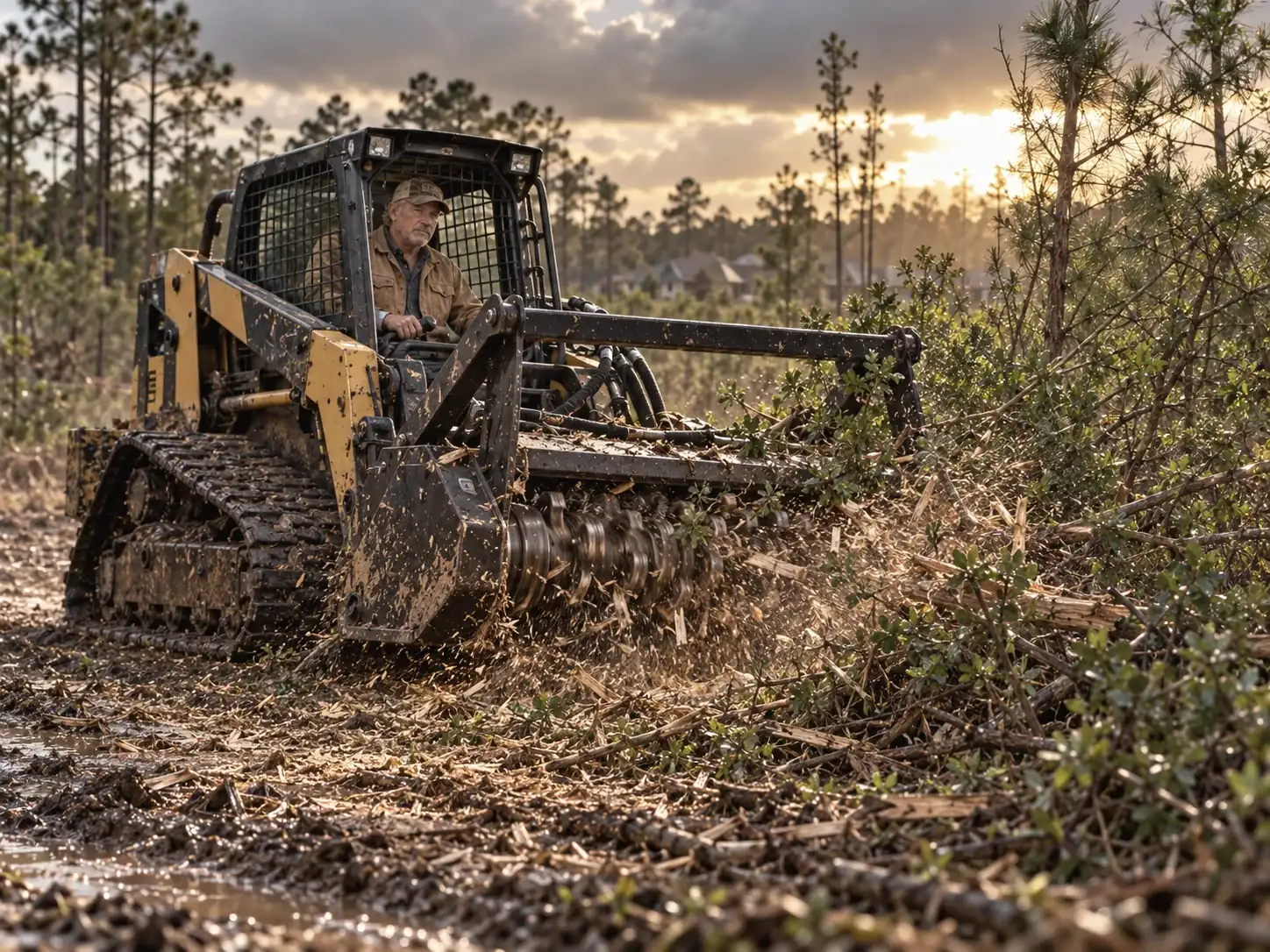
Liberty County has the densest timber and the wettest ground in the Houston area, and forestry mulching to clear land is the only tool that works on both. I was born in Dayton, so I will tell you first: the Trinity bottoms are wet half the year, and the skid steer floats where a dozer does not. The big machine clears 4 to 8 acres of pine understory a day at $4,000 plus transport. I've cleared tracts from Plum Grove to Ames this way since 2018. Call (713) 587-6978 or send three photos of your place. Janine will have a number back to you by tomorrow.
 COUNTY FIELD GUIDE
Forestry Mulching to Clear Land in Liberty County: Pine Brush and Trinity Tallow
Liberty County has its own mix of loblolly pine, bottomland hardwood, chinese tallow along the trinity. We walk the plan through access, soil, and drainage. If a mapped floodplain or waterway is involved, we check the required approvals before dirt moves.
Loblolly pine understory on the ridges, and water oak, sweetgum, privet and Chinese tallow in the Trinity bottoms, which is every shrub, bush and vine the East Texas woods can grow. This is the thick end of the Big Thicket, where my grandfather logged pine, and an acre here carries more wood than three acres in Katy. Texas land clearing and brush removal comes in several forms, including forestry mulching, and in bottomland this is the one that does not bog. The drum teeth take a pine sapling or a tallow trunk up to 8 inches in a pass; over 8 inches the clearing goes to the big machine, and a bottomland oak over 14 inches goes to a sawyer first. Selective clearing is the usual order on the ridges: undergrowth out, pines over a set diameter kept. No mesquite up here and no acres of cedar like the Hill Country, just pine and hardwood and the privet under them. Tape the trees that stay.
The growth decides what can be mulched and what needs more than one pass.
Wet ground and access change the number before work starts.
Janine checks the route and schedule for each address.
The point Hollis checks first
Trinity River floodplain; wet ground half the year on low tracts. A clean lot is no use if water gets trapped against the next building pad. Tell us if the ground stays wet after a rain.
Brush Clearing for Pasture and Acreage Around Dayton, Cleveland and Liberty
Most acreage calls here are for 10 to 20 acres, not 3-5 acres, because Liberty County is the cheapest land in the seven counties and people buy it by the tract. A rancher wants bottomland pasture back from the tallow, a landowner wants fence lines opened on a Hardin farm, a land developer on the Grand Parkway wants a corridor cut for the survey crew. Land clearing might mean a dozer and a burn pile to you. In the Trinity bottoms it means a drum, because a dozer puts down 8 pounds per square inch on wet clay and goes under, and the skid steer on wide tracks puts down 4 and floats. The Dayton tract in my Field Sketches was ten acres of pasture reclamation, bottomland tallow and privet, wet in March and dry in May: four days on the big machine, $17,500 plus transport, and I sketched it twice because the first visit was underwater. The skid steer clears 1 to 3 acres a day at $3,000; the dedicated high-horsepower mulcher clears 4 to 8 at $4,000 plus transport. Timber folks call it vegetation management. In Texas it is clearing brush and getting usable pasture back.
Texas Land Clearing for Residential Lots and Country Backyards
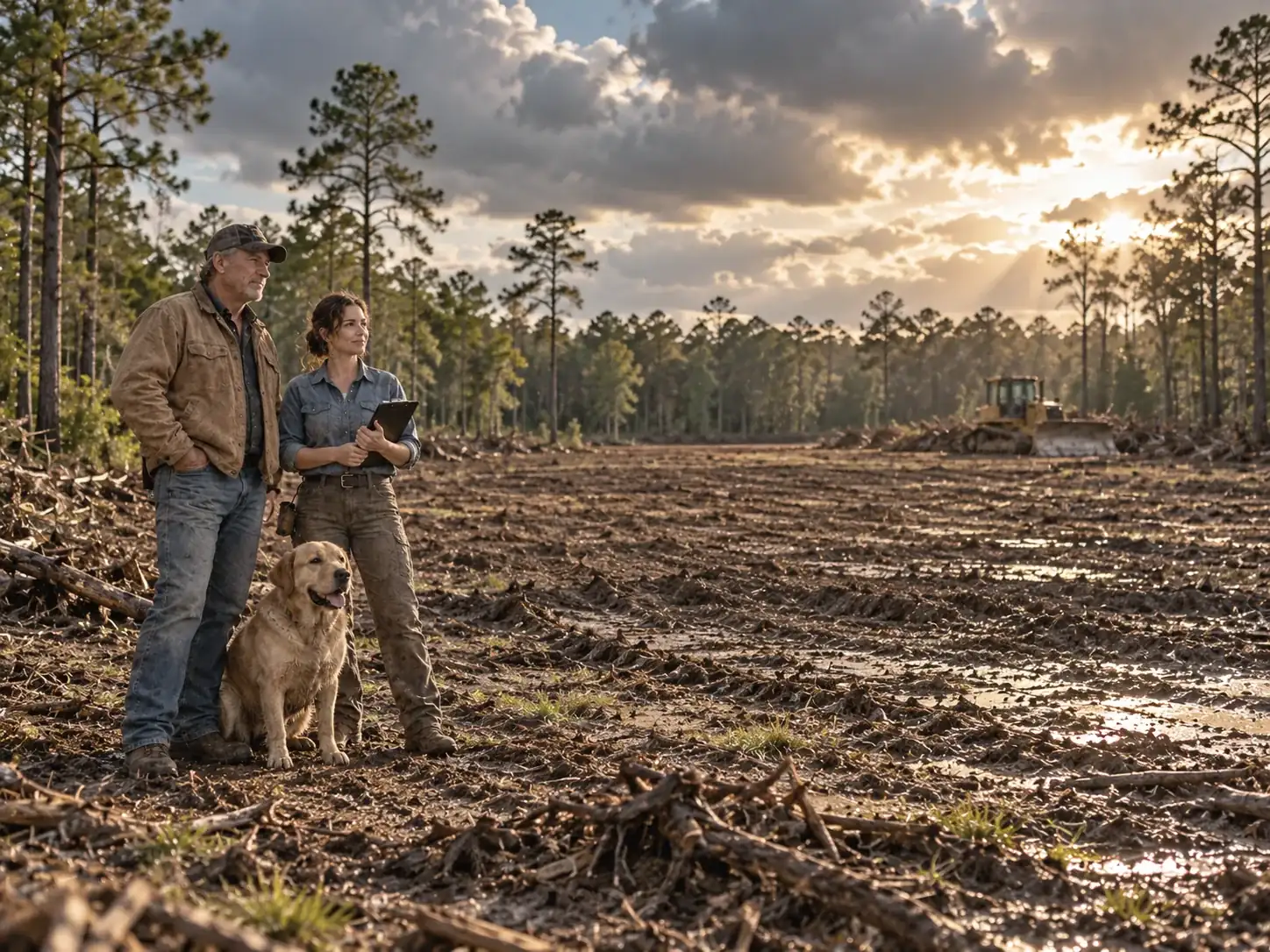
A half-acre lot in Dayton or Liberty is one day and one machine, $3,000, and a one-acre wooded lot on a Cleveland ridge is two days of clearing if you want the pines kept and a pad roughed. That is the most common small land clearing we do in this Texas county, for a property owner who bought the lot behind his or a business owner who needs a pad on Highway 90 completely cleared before the surveyor. The skid steer fits a 10-foot gate. We clear brush to the line, including brush in the ditch the county never mows, and leave a chip layer two to four inches thick. Land clearing services inside Dayton and Cleveland city limits come with a no-burn rule; outside, TCEQ compliance and the county burn ban still make a dozer crew that would create burn piles a bad bet most summers. On our jobs in Dayton the owner sees the back fence for the first time about an hour before dark on day two.
What Clearing and Mulching Cost in Liberty County, TX
Numbers first. The lot decides the final price.
$1,000 to $2,500 an acre by density, or by the day: $3,000 for the skid steer with transport included, $4,000 plus transport for the big machine. Dense bottomland tallow and privet add a day. Wet ground adds a day, and in the Trinity bottoms the same tract is one price in May and a day longer in March. Minimum trip is $1,200 to $1,500. Texas land clearing with a dozer and haul-off starts at $4,000 an acre and adds $600 to $1,200 a load, and in the bottoms the dozer cannot get in half the year anyway, so brush clearing by mulching wins on nearly every tract. Stumps are a separate line, $150 to $400 each by diameter; excavation services and site preparation for a pad are separate too, and I do not pour concrete or install septic. Professional forestry mulching services should hand you a sketch and an invoice, and ours are on the page when we finish. The on-site estimate is free inside Greater Houston, and Dayton counts. Call (713) 587-6978 with the acreage and the month you want, and I will tell you if the month is wrong before I tell you the price of the clearing.
Skid steer mulcher
Per day. Transport included. Trees under 8 inches.
Dedicated mulcher
Per day. Transport is additional. Large timber and dense ground.
Changes the day
Access, moisture, and what must leave the lot change the real number.
Stumps, Mowing and Regrowth After Clearing in the Trinity River Floodplain
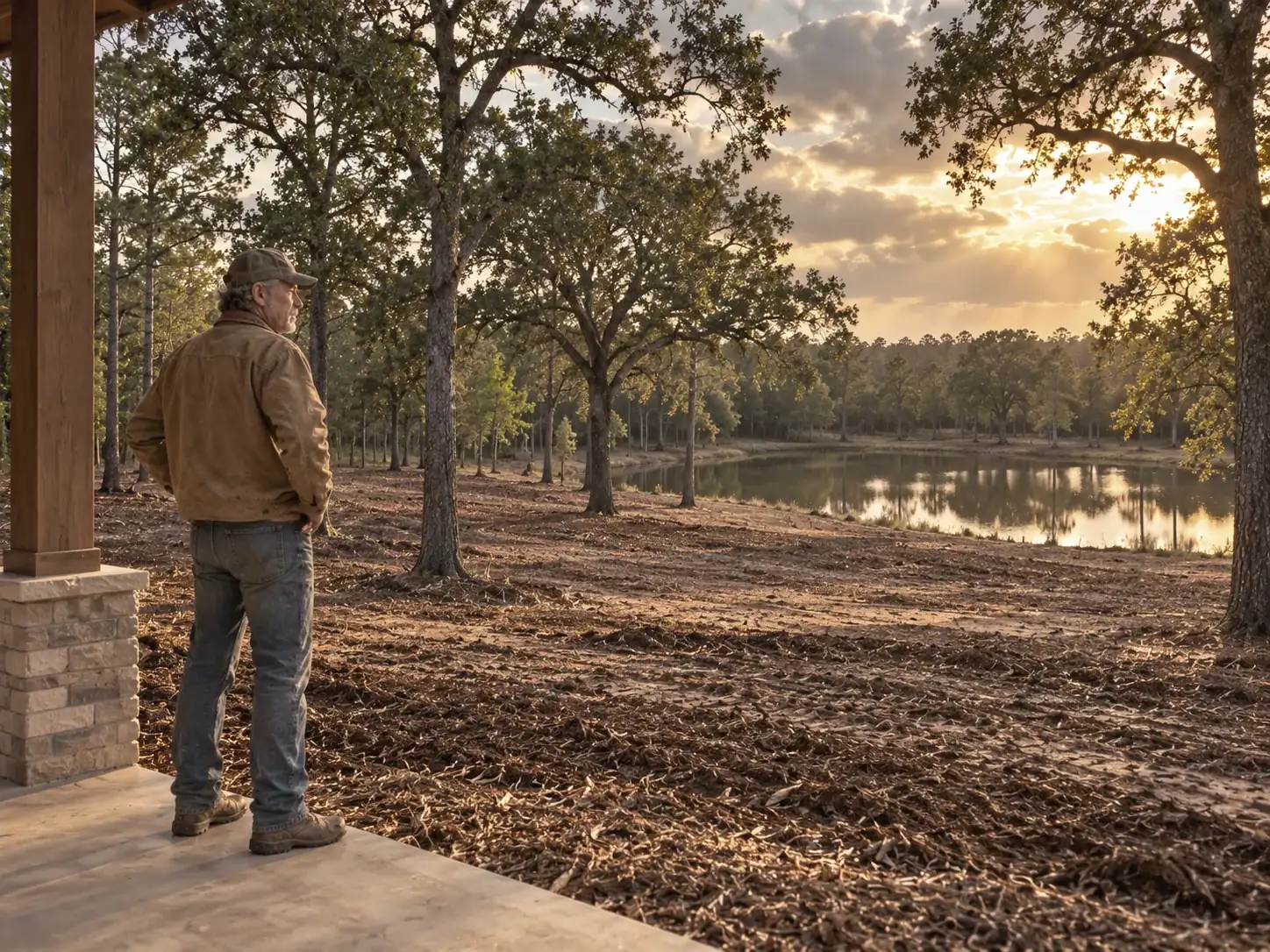
Leave the chips down through the next high water. In the FEMA mapped floodplain the layer is a natural erosion barrier; when the Trinity comes up, bare clay goes downstream and chipped clay stays. People call that eco-friendly. I call it keeping your pasture. Mow the tallow and privet sprouts when they reach knee high, twice the first Texas summer, because tallow roots run 3 feet into the clay and will overgrow a bottom in two seasons. Stump removal is separate from clearing: we grind to the dirt, but a crown over 8 inches stays under the chips, and stump grinding runs $150 to $400 each before a slab. For site prep on a ridge, the builder rakes the chips off the pad footprint and crowns the sand; in the bottoms, no pad goes in below base flood elevation, and the county's development permit comes before dirt moves. I do not talk about environmental sustainability. I talk about dirt that is still there after the river has been and gone from the land clearing.
Service Area: Where We Mulch in Liberty County
Our equipment yard is in Hockley. Send the address and Janine will confirm the route.
Dayton, Cleveland, Liberty, Plum Grove, Hardin and Ames, plus the county roads off Highway 90, Highway 146 and FM 1960 east of the San Jacinto. The yard is in Hockley, an hour and a quarter down FM 1960, and the terrain changes from sand ridge to gray clay in twenty feet of elevation, so the service call here starts with a question about which one you are on. Texas has 254 counties and we clear in seven of them around Houston; this is the one I grew up in, and the one where the clearing waits for the river. Land clearing in Liberty County means pine and bottomland hardwood; tree removal of a single big oak beside a house is a different trade, and I know people who do it. Land development along the Grand Parkway at Plum Grove books us by the week in the dry months. Tell Janine the month you want the clearing.
Ready for Brush Clearing on Your Liberty County Tract?
Send three photos of your place and the address, or call (713) 587-6978. Janine will have a number back to you by tomorrow, usually within the hour on weekdays. Over two acres or anything in the bottoms, I drive out and walk it with you; the free on-site estimate covers all of Greater Houston and our crews are insured. Book the land clearing now and I will hold you a dry week.
Tell Janine about your lot.
The address. The growth. Three honest photos.
Design preview. This form does not send or store information until a backend is connected.
Questions From Liberty County on Mulching, Stump Grinding and Excavation Services
If your question is about wet ground, Janine will ask me.
How much does clearing cost per acre in Liberty County?
$1,000 to $2,500 an acre by density, or $3,000 a day for the skid steer with transport included and $4,000 plus transport for the big machine. Ten acres of bottomland pasture reclamation ran $17,500 plus transport over four days, and that number is the number on the invoice. Wet ground adds a day.
Will grass grow after clearing with a mulching head?
Yes, through the chips, usually by the second month in a wet Texas spring, and in the bottoms the layer is what keeps the seed from floating off in the next rise. Bahia comes back through two inches of chips on the ridges. Do not rake it off; rake it and the Trinity takes the top inch of clay.
Does mulching remove stumps?
No. The head cuts trees and brush to the dirt and leaves the root crown under the chips. Pine crowns under 6 inches rot in two seasons; tallow crowns resprout unless we cut them 6 inches below grade, and that runs $150 to $400 each. I tell you which before the clearing starts.
Is mulching better than traditional land clearing with a dozer?
In the Trinity bottoms, yes, every time between November and April, because the dozer cannot get in. Forestry mulchers leave the topsoil and the layer; a dozer scrapes both into a pile you then pay to burn or haul. Dozer clearing wins only on a dry ridge for a same-day pad grade or Texas timber over 12 inches.
How do I get a number for clearing my tract?
Call (713) 587-6978 or send three photos and the address. Janine answers every form and call and has a number back by tomorrow. Last spring on a lot off FM 1409 near Dayton the owner sent photos in March and we cleared it the first dry week of May. Forest management on a big Texas tract gets a walk first; a lot gets a number first.